Compliance guide
Florida dewatering permits, in plain language
The rules that govern pumping groundwater off a Central Florida construction site, what they require, and which parts we handle for you.
Dewatering in Florida is legal, routine and regulated. The regulation most jobs meet is the state's Dewatering Generic Permit under Rule 62-621.300(2), F.A.C., which covers discharging groundwater from excavations, foundations, vaults and trenches to surface waters through a point source. It is a notice-based permit: you file a notice of intent before discharging, follow its conditions on turbidity and discharge quality, and file a termination notice when pumping ends. The FDEP construction dewatering FAQ is the agency's own explanation, and the notice of intent form is what actually gets filed.
The second layer is the water management district. Seminole County sits in the St. Johns River Water Management District, and very large or long withdrawals can trip consumptive use thresholds handled through SJRWMD ePermitting. Most trench and pad jobs stay under those thresholds; the point of checking early is that the ones that do not are exactly the jobs too big to gamble on.
Sensitive receiving waters raise the bar further. Discharge near an Outstanding Florida Water like the Econlockhatchee, the spring runs near DeBary, or the Winter Park chain of lakes gets stepped-up filtration and closer attention to where the outfall sits. That is judgment learned by working these basins, and it is included in how Lake Monroe Dewatering scopes every job.
The compliance sequence
- 1Identify the discharge: where the pumped groundwater will go and whether it reaches surface waters through a point source.
- 2File the FDEP Dewatering Generic Permit notice of intent before pumping starts.
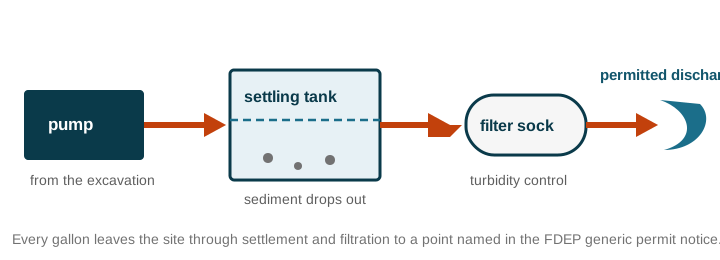
- 3Set the discharge train: settling tank, filter sock or bag, and a stabilized outfall.
- 4Keep the notice, the discharge plan and inspection notes on site for the duration.
- 5At completion, file the notice of termination and close the file clean.
On our jobs, steps one through five are our scope. You stay the permittee of record as the site contractor; we do the paperwork, build the discharge train, and keep the documentation an inspector wants to see.
Permit questions
Do I need a dewatering permit if the water stays on my own site?
Water fully contained and infiltrated on your own parcel, with no point source discharge to surface waters, generally falls outside the generic permit. The catch is "fully": an overflow to a ditch in a storm is a discharge. We design containment honestly or file the notice, whichever the site truly supports.
How long does the FDEP generic permit take?
It is a notice, not an application you wait on: coverage under Rule 62-621.300(2) begins when a complete notice of intent is properly submitted before discharge. Practically, we file it during system design so it is never the critical path.
What is turbidity and why does the inspector keep saying it?
Cloudiness from suspended sediment. Florida limits how much your discharge can raise turbidity in the receiving water, which is why every setup we run includes settlement and filtration before the outfall. Clear discharge is the difference between a routine inspection and a violation letter.
When does the water management district get involved?
SJRWMD attention arrives with scale and duration: very large withdrawals can trip consumptive use thresholds, and works within district lands or systems need their permits. Typical trench and pad dewatering stays under those thresholds, and when a project does not, we flag it in the quote stage, not after mobilization.
Let us carry the paperwork
Tell us the site and the dig. Pricing is on the cost page and the permit work is part of the setup.